Planning a Nikkah in Pakistan is one of the most emotionally intense, spiritually significant, and logistically complex events a couple will ever face. It’s the exact moment your marriage becomes official, both in the eyes of Islam and in the eyes of the Pakistani state. Between coordinating with the Union Council, negotiating the Haq Mehr with your families, booking a Qari on a Friday evening that half the city also wants, and ensuring the aesthetics are picture-perfect for your photographer, the details can quickly spiral into overwhelming territory.
We know this because we’ve seen it happen hundreds of times. Having worked alongside over 500 couples and their families across Lahore, Karachi, Islamabad, Faisalabad, and Peshawar, we’ve watched ceremonies go beautifully right, and we’ve seen them derail over tiny logistical details that nobody warned the couple about.
This guide exists to be the resource we wish every couple had before their big day. It’s not a sales pitch. It’s the complete, honest breakdown of everything you will actually encounter while planning a Nikkah ceremony in Pakistan in 2026.
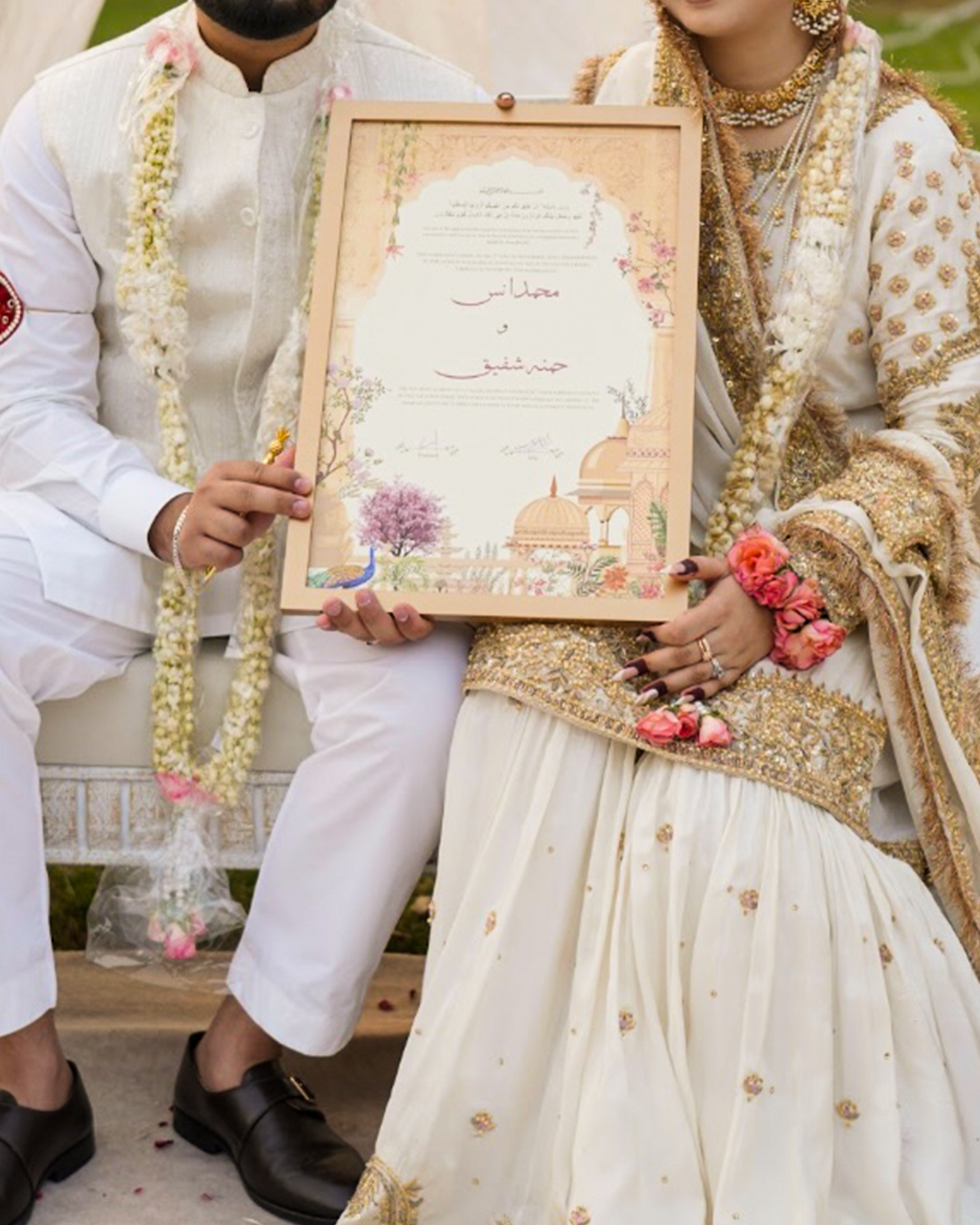
Table of Contents
1. The Islamic Requirements: What Makes a Nikkah Valid
Before thinking about flowers, outfits, or guest lists, it’s important to understand that a Nikkah is first and foremost a religious contract. Without satisfying these core Islamic elements, the marriage is not considered valid, regardless of how beautiful the ceremony looks:
Ijab-o-Qabool (Proposal and Acceptance)
This is the heart of the ceremony. The Qari (officiant) asks the bride, usually through her Wali, whether she accepts the groom as her husband. The bride must say “Qabool hai” (I accept) three times clearly, followed by the groom doing the same. In traditional settings, the Qari goes to the bride’s side of the venue (since men and women are often seated separately) and asks for her consent privately with her female relatives as witnesses.
From our experience: At many of the weddings we’ve worked with, the bride is seated in a separate room with her closest female relatives. The anticipation in the men’s hall during those few minutes of silence is incredibly emotional. We’ve seen grown men cry. It is hands-down the most powerful 60 seconds of any Pakistani wedding.
The Wali (Guardian)
The bride’s Wali, typically her father, or in his absence, her brother or paternal grandfather, must consent to the marriage. In the Hanafi school of thought (predominant in Pakistan), an adult woman can technically contract her own marriage, but in practice, the Wali’s presence and consent are deeply culturally expected and widely considered essential.
The Witnesses (Gawah)
Islamic law requires at least two adult, sane Muslim male witnesses to be present during the Ijab-o-Qabool. These witnesses must physically hear both the proposal and the acceptance. They then sign the Nikkahnama as official Gawah. Many families choose close uncles, elder brothers, or respected family friends for this role.
The Mahr (Dower)
The Mahr is a mandatory gift from the groom to the bride. It is her absolute, non-negotiable Islamic right. It can be money, gold, property, or even something symbolic like a commitment to teach her a skill (such as Quran recitation). In Pakistan in 2026, common Mahr amounts range widely:
- Modest families: PKR 50,000 to PKR 200,000 in gold or cash.
- Upper-middle class: PKR 500,000 to PKR 2,000,000, often a mix of gold sets and cash.
- Affluent families: Property, cars, or gold sets valued well above PKR 5,000,000.
The Mahr is split into two categories:
- Mahr Mu’ajjal (Prompt): Given immediately at the time of the Nikkah.
- Mahr Mu’wajjal (Deferred): A specified amount payable on demand at any point during the marriage.
Practical Note: The exact Mahr amount is recorded in the official Nikkahnama and is legally enforceable in Pakistani courts. Be very deliberate about what is written down.
The Khutbah (Sermon)
While not a strict validity requirement, the Nikah Khawan (officiant) traditionally delivers a short Islamic sermon (khutbah) before the contract is signed. This usually includes recitation of Surah Al-Fatiha, along with two deeply significant verses:
يَـٰٓأَيُّهَا ٱلنَّاسُ ٱتَّقُوا۟ رَبَّكُمُ ٱلَّذِى خَلَقَكُم مِّن نَّفْسٍۢ وَٰحِدَةٍۢ وَخَلَقَ مِنْهَا زَوْجَهَا وَبَثَّ مِنْهُمَا رِجَالًۭا كَثِيرًۭا وَنِسَآءًۭ ۚ وَٱتَّقُوا۟ ٱللَّهَ ٱلَّذِى تَسَآءَلُونَ بِهِۦ وَٱلْأَرْحَامَ ۚ إِنَّ ٱللَّهَ كَانَ عَلَيْكُمْ رَقِيبًۭا ١
“O humanity! Be mindful of your Lord Who created you from a single soul, and from it He created its mate,1 and through both He spread countless men and women. And be mindful of Allah—in Whose Name you appeal to one another—and ˹honour˺ family ties. Surely Allah is ever Watchful over you.”
وَمِنْ ءَايَـٰتِهِۦٓ أَنْ خَلَقَ لَكُم مِّنْ أَنفُسِكُمْ أَزْوَٰجًۭا لِّتَسْكُنُوٓا۟ إِلَيْهَا وَجَعَلَ بَيْنَكُم مَّوَدَّةًۭ وَرَحْمَةً ۚ إِنَّ فِى ذَٰلِكَ لَـَٔايَـٰتٍۢ لِّقَوْمٍۢ يَتَفَكَّرُونَ ٢١
“And one of His signs is that He created for you spouses from among yourselves so that you may find comfort in them. And He has placed between you compassion and mercy. Surely in this are signs for people who reflect.”
This second verse Surah Ar-Rum 30:21 is the most beloved and widely recited verse in Pakistani Nikah ceremonies, and it is also the verse most commonly featured on decorative keepsake certificates.
2. The Legal Process: Union Councils, NADRA, and Common Mistakes
A widespread misconception among Pakistani couples, especially those getting married for the first time, is that the religious ceremony is the final step. It absolutely is not. In Pakistan, your Nikkah is not legally recognized until it is formally registered with the government.
The Official Nikkahnama
During the ceremony, the Nikkah Khawan will present the government-issued Nikkahnama. This is a multi-page, standardized Urdu/English form governed by the Muslim Family Laws Ordinance, 1961. It records the names of the couple, the Wali, the witnesses, the Mahr terms, and several legal clauses regarding the bride’s conditional right to divorce (Talaq-e-Tafweez).
You must ensure four original copies are signed:
- One for the Bride
- One for the Groom
- One for the Nikkah Khawan
- One for the local Union Council (UC)
Warning from experience: We have seen ceremonies where the Qari only brought two copies one for himself and one for the UC. This leaves the bride and groom without their own originals. Always confirm the number of copies with your Nikkah Khawan at least 3 days before the event. If needed, blank Nikkahnama forms can be purchased from stationery shops near any District Court for PKR 50-100.
NADRA Marriage Registration Certificate (MRC)
After the Nikkah, the UC copy is submitted to your local government office. Following that, you must apply for a computerized Marriage Registration Certificate (MRC) from NADRA. This is what you will need for passport applications, visa sponsorships, property transactions involving your spouse, and adding your spouse to your CNIC family tree.
NADRA recently launched an online marriage registration system via the “Pak Identity” mobile app, currently available across all districts of Punjab and select districts in Sindh (including Karachi East, Karachi Central, Mirpurkhas, and Larkana) and Quetta district in Balochistan. You can verify district availability and download the app via the official NADRA portal.
Critical Tip: Ensure the names on your Nikkahnama exactly match the names printed on your CNIC cards, including the spelling of your father’s name. Even a minor discrepancy (e.g., “Muhammad” vs. “Mohammad”) will cause delays at NADRA.
The Keepsake Alternative
Because the government Nikkahnama is purely functional (and frankly, quite visually plain), a growing number of modern Pakistani couples have started commissioning a separate, beautifully designed symbolic keepsake version for their wedding photography and home display. These keepsake certificates have absolutely no legal standing; they are purely decorative artwork.
3. Choosing Your Venue: Mosque, Home, or Marquee
The venue you choose fundamentally shapes the tone, the cost, and the logistics of your entire ceremony.
The Mosque Nikkah
Hosting the ceremony at a mosque such as Lahore’s Badshahi Mosque, Islamabad’s Faisal Mosque, or Peshawar’s Mahabat Khan Mosque is deeply spiritual and incredibly cost-effective. The ceremony typically takes place after Asr or Maghrib prayers. There is no stage, no elaborate décor, and no DJ. The guest list is usually limited to 30-80 close family members and friends, and the event is followed by a simple dinner at a nearby restaurant or at a family home.
Typical costs for a mosque Nikkah:
- Mosque donation/booking: PKR 10,000 – 50,000 (varies by city and mosque)
- Qari (officiant) fee + Hadiya: PKR 5,000 – 15,000
- Simple dinner catering (50 guests): PKR 40,000 – 80,000
- Total estimate: PKR 55,000 – 145,000
The Home Nikkah
An increasingly popular choice for families who want intimacy without the austerity of a mosque setting. The ceremony is conducted in the family’s drawing room or courtyard. A small decorative setup, often a sofa draped in flowers, serves as the “stage.” This option allows full control over the food (usually home-cooked biryani, which, let’s be honest, is always better than catered food anyway).
Typical costs for a home Nikkah:
- Qari fee + Hadiya: PKR 5,000 – 15,000
- Minimal floral decor and sofa setup: PKR 15,000 – 30,000
- Home-cooked meal (ingredients for 50-100 guests): PKR 30,000 – 60,000
- Total estimate: PKR 50,000 – 105,000
The Marquee / Banquet Hall Nikkah
This is the standard for large Pakistani weddings (200+ guests). The Nikkah often takes place as part of a combined event (Nikkah + Walima). This option requires a professional stage, sound systems, elaborate catering, and significantly more logistical planning.
Typical costs for a marquee Nikkah (Lahore/Karachi, 2026):
- Hall/marquee rental: PKR 150,000 – 400,000
- Full stage décor (fresh flowers): PKR 100,000 – 300,000
- Catering (300 guests, 3-course menu): PKR 200,000 – 500,000
- Photography + videography: PKR 80,000 – 200,000
- Qari fee: PKR 10,000 – 15,000
- Total estimate: PKR 540,000 – 1,415,000
For couples choosing the marquee route but wanting to save significantly on stage decor specifically, we’ve put together a separate detailed guide on achieving stunning results on a tight budget.
4. Budgeting Your Nikkah: An Honest PKR Breakdown
To give you the clearest possible picture, here is a consolidated comparison table of all major expenses across the three venue types:
| Expense | Mosque Nikkah | Home Nikkah | Marquee Nikkah |
| Qari / Officiant | PKR 5K-15K | PKR 5K-15K | PKR 10K-15K |
| Venue / Booking | PKR 10K-50K | Free | PKR 150K-400K |
| Décor & Stage | None | PKR 15K-30K | PKR 100K-300K |
| Catering | PKR 40K-80K | PKR 30K-60K | PKR 200K-500K |
| Photography | PKR 20K-50K | PKR 30K-60K | PKR 80K-200K |
| Bridal Outfit | PKR 60K-300K | PKR 60K-300K | PKR 100K-500K |
| Total Range | PKR 135K-495K | PKR 140K-465K | PKR 640K-1.9M |
Pro Tip: If you are doing a marquee event, the single biggest area where you can dramatically reduce costs without reducing visual quality is the stage décor. Read our detailed breakdown on how to use minimalist arches, fairy lights, and wholesale flower markets to cut your stage budget by 60-70%.
5. The Day-Of Timeline: What Actually Happens Hour by Hour
One thing that genuinely surprises first-time couples is how fast the actual Nikkah ceremony goes. The religious event itself, from the moment the Qari begins the Khutbah to the moment the last signature is inked, takes approximately 15 to 30 minutes.
Here is a realistic timeline for a typical evening marquee Nikkah in Pakistan:
| Time | Activity |
| 6:00 PM | Venue opens. Tent service finalizes stage setup. The photographer begins detailed shots of the stage and the signing table. |
| 7:00 PM | Guests begin arriving. The welcome board is photographed. |
| 7:30 PM | Groom arrives with baraat procession (in some traditions). |
| 8:00 PM | The bride is escorted to the stage (or a separate room for the consent). |
| 8:15 PM | Qari delivers the Khutbah (sermon). |
| 8:30 PM | Ijab-o-Qabool ceremony. Qari goes to the bride’s side for her consent. Returns to the groom’s side to complete the contract. |
| 8:45 PM | Signing of the Nikkahnama. The bride, groom, Wali, witnesses, and Qari each sign all four copies. This is the peak photography moment. |
| 9:00 PM | Dua (prayer) and congratulations. Close family takes portraits on stage. |
| 9:30 PM+ | Dinner service begins. |
From our experience: The signing segment at 8:45 PM is where everything the couple has planned either shines or falls apart visually. We have seen couples scramble because nobody brought a proper pen, or the bare table looked terrible on camera. The details on that table—the pen, the certificate, the runner—are what appear in every single close-up photograph. It’s a tiny 10-minute window, but it produces the images you will display for a lifetime.
6. The Signing Moment: Why the Details Matter More Than You Think
Ask any professional wedding photographer in Pakistan: the single most intensely photographed moment of the entire event is when the bride picks up the pen and signs the register.
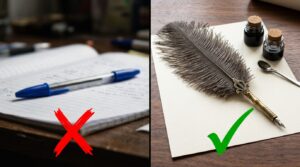
For decades, couples unknowingly ruined this cinematic moment by using a standard blue ballpoint pen handed over by the Qari from his shirt pocket. The pen would get lost in the shot, too small, too generic, visually invisible against the heavy bridal outfit and elaborate stage.
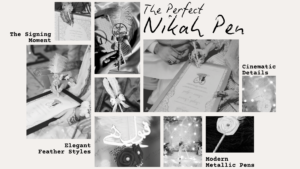
In 2026, a growing number of couples are investing in purpose-made signing accessories. A well-chosen luxury signing pen, whether a dramatic feather pen for the bride or a sleek metallic pen for the groom, adds an intentional, storytelling element to the macro photography. Similarly, displaying a beautifully custom-framed artwork piece on the signing table gives the photographer visually rich props to work with.
These small investments (typically PKR 1,500 – 5,000 combined) have disproportionately large impact on the final photography output. You can browse a range of handcrafted Nikah pens and custom certificate frames to get a sense of the styles and price points available.
7. Common Mistakes We See Couples Make
Having been part of 500+ wedding supply chains, here are the most common logistical mistakes we see Pakistani couples make during their Nikkah:
- Not confirming the number of Nikkahnama copies. Always verify with your Qari at least 3 days before. You need four signed originals.
- Mismatched CNIC names. If the spelling on your CNIC doesn’t match the Nikkahnama, NADRA will reject your MRC application. Fix any discrepancies before the ceremony.
- Ignoring the signing table. Families spend PKR 200,000+ on the backdrop but leave the signing table completely bare. Your close-up photos happen at the table, not at the backdrop.
- Booking the Qari too late. Popular Qaris in cities like Lahore and Karachi are fully booked on Fridays and Sundays. Book at least 2-3 weeks in advance.
- Forgetting the Mahr discussion. The Mahr amount should be finalized and mutually agreed upon before the wedding day, not negotiated awkwardly in front of the Qari with 300 guests waiting.
- Skipping the NADRA registration. Many couples delay the computerized MRC for months or even years. This causes enormous problems when applying for passports, visas, or property transfers.
Frequently Asked Questions
How long does the actual Nikkah ceremony take?
The religious portion, Khutbah, Ijab-o-Qabool, and signing typically takes 15 to 30 minutes. The full event, including guest arrival and dinner, runs 3-4 hours.
How long does it take to get the NADRA Marriage Registration Certificate?
Once the Union Council registers the Nikkahnama, the computerized NADRA certificate (MRC) can typically be issued within 3 to 7 working days, though processing times vary by district.
Can the bride dictate her own Haq Mehr?
Yes. In Islam, the Haq Mehr is the absolute, non-negotiable right of the bride. She can dictate the amount, form (cash, gold, property), and terms (prompt or deferred) before signing.
Is it compulsory to have a separate Nikkah event?
No. Many families combine the Nikkah with the Walima (reception). Others host the Nikkah as a simple, intimate event and hold a grand Walima separately. There are no religious rules about how many events you must have.
Do we need a customized Nikkah certificate to get married?
Absolutely not. A custom keepsake certificate has zero legal or religious standing. It is purely a decorative artwork piece used for photography and home display. The government-issued Nikkahnama is the only legally recognized document.
Can the Nikkah happen without the bride physically present?
In the Hanafi school, a bride can appoint a Wakeel (male representative) to give consent on her behalf. However, it is strongly recommended and increasingly expected by families that the bride is present and gives her consent personally.
What happens if the Nikkahnama is lost?
You can obtain a duplicate from the Union Council where it was originally registered. This is another reason why the computerized NADRA MRC is so important; it serves as a permanent digital backup.
Written by the team at Wedding Shading. Having served as custom accessory suppliers for over 500 Nikkah ceremonies across Pakistan from Peshawar to Hyderabad, we’ve distilled this guide from genuine, firsthand experience watching ceremonies unfold. Our goal is to help every couple walk into their Nikkah day with confidence and clarity.